What Drives the Cost to Paint a House Exterior on Cape Cod, and What a Written Estimate Should List
Nobody can price a Cape Cod exterior from a photo. Here is what a painter is measuring during the walkthrough, and the prep lines that decide what the number means.
 By Vinny, Mainsail Painting
In this article 9 sections
- How much does it cost to paint a house exterior on Cape Cod?
- Why is exterior house painting so expensive?
- What prep work should be included in an exterior painting estimate?
- How does the condition of the house change the quote?
- What is different about painting an exterior on Cape Cod?
- What should a written estimate list?
- When it is worth having a professional walk the house
- Frequently asked questions
- Sources
The short answer
Condition sets the price more than square footage does. The National Park Service sorts exterior paint conditions into three severity classes: minor blemishes needing no paint removal, top-layer failure needing limited removal, and multiple-layer failure needing total removal.[1]
Materials are the predictable half. One manufacturer’s data sheet for a 100% acrylic exterior paint lists 350 to 450 square feet per gallon and one or two coats, so measured area and coat count settle the paint; the rest is labor.[2]
Paint build-up of about 1/16 inch, roughly 16 to 30 layers, is itself enough to trigger cracking and peeling, so another coat over a failing film is not a saving.[1]
Access is labor. Federal construction rules require fall protection for a worker 6 feet or more above a lower level, so a three-story elevation is not the same job as a one-story ranch.[4]
On a home built before 1978, paid work that disturbs more than 20 square feet of exterior paint falls under EPA’s renovation rule and must be done by a certified firm;[5] Massachusetts administers its own authorized version of that program.[6]
The cost to paint a house exterior comes from four things a painter measures at your house: how much surface there is, what condition each surface is in, how hard it is to reach, and what goes on top. No web page can price your home. What this guide can do is show you what gets measured during a walkthrough, and how to read the estimate that follows.
How much does it cost to paint a house exterior on Cape Cod?
There is no honest single number, because the figure is built from surfaces measured on site, their condition and the access to them. At Mainsail Painting we visit within 24 hours, walk the house with you looking at every surface, and send a written quote within one business day.
Materials are the predictable part. One manufacturer’s data sheet for a 100% acrylic exterior paint lists a spread rate of 350 to 450 square feet per gallon and tells the applicator to “apply one or two coats.”[2] Measure the surfaces, settle the coats, and the paint is accounted for. Everything after that is labor, and labor is where two estimates for the same house diverge.
| What gets measured | Why it moves the number |
|---|---|
| Surface area | Siding, trim, soffits, porches and doors are counted separately: each takes different work |
| Condition | Sound paint needs washing and dulling; failing paint needs removal, which is hours, not materials |
| Access | Ground-floor clapboard, a third-story gable and a wall over a slope are three different setups |
| Detail | Railings, brackets, sash and shutters are hand work, counted in pieces rather than square feet |
| Coating system | Primer where it is needed, then one or two coats, decided surface by surface |
Why is exterior house painting so expensive?
Because most of the hours are not spent painting. They go into getting the surface ready, and that work stays unpredictable until someone has looked at the building closely.
The National Park Service is blunt about old paint: removing it is “a messy, expensive, and potentially dangerous aspect” of restoring a building, and “the amount of work involved in any paint removal project must therefore be analyzed on a case-by-case basis.”[1] Conditions also vary across one house, so each item of exterior woodwork — siding, doors, windows, eaves, shutters — “should be examined early in the planning phase.”[1]
Height adds the second layer. Under federal construction rules, a worker on a surface with an unprotected edge “which is 6 feet (1.8 m) or more above a lower level shall be protected from falling by the use of guardrail systems, safety net systems, or personal fall arrest systems.”[4] Staging and fall protection take time to set, move and strike, and that time belongs to the elevation, not to the paint.
What prep work should be included in an exterior painting estimate?
A complete estimate names the preparation surface by surface, not as one word. These are the steps a coating needs before it can do its job:
- Wash. Most surface grime “can be loosened by a strong, direct stream of water from the nozzle of a garden hose.”[1] Protected areas matter most: one data sheet asks that “un-weathered areas such as eaves, porch ceilings, overhangs and protected wall areas” be washed and rinsed, because contaminants there block adhesion.[2]
- Treat mildew. It feeds on moisture and thrives “in areas where dampness and lack of sunshine are problems,” such as window sills, under eaves and the north side of a house. A drop of household bleach tells it from dirt: mildew turns white.[1]
- Remove what has failed. The general approach is “to remove paint to the next sound layer using the gentlest means possible, then to repaint.”[1]
- Dull what stays. Surfaces have to be “clean, dry and free of oil, grease, wax, rust, mildew, chalk and loose or scaling paint,” and glossy surfaces must be dulled.[2]
- Correct the moisture source. Faulty flashing, leaking gutters, defective roof shingles, cracks and holes in siding and trim, deteriorated caulking and shrubbery against painted wood all come first.[1]
- Repair deteriorated wood. Where bare wood has been exposed to standing water for a long period, “wood rot is a strong possibility,” and repair or replacement “should take place before repainting.”[1]
- Prime. The primer is the base for every coat above it, and it is used “whether the top coat is an oil-base or latex-base paint.”[3]
- Then the finish coats. Extension guidance describes two coats of a good-quality acrylic latex house paint over primer;[3] the acrylic data sheet allows one or two.[2]
How does the condition of the house change the quote?
More than anything else on the list. The National Park Service groups exterior paint conditions by severity, and each class carries a different amount of labor.[1]
| Class | What you see | What it generally takes |
|---|---|---|
| Class I | Dirt, soot, cobwebs, mildew, excessive chalking, staining | No paint removal: cleaning, then repainting |
| Class II | Failure of the top layer or layers: crazing, intercoat peeling, blistering, wrinkling | Limited paint removal |
| Class III | Substantial or multiple-layer failure: peeling to bare wood, cracking, alligatoring | Total paint removal |
Two practical points follow. Stripping is not the default: “paint can adhere just as effectively to existing paint as to bare wood, providing the previous coats of paint are also adhering uniformly and tightly to the wood and the surface is properly prepared.”[1] A painter who proposes to strip a sound house is selling hours the house does not need.
The opposite shortcut is worse. When paint builds to about 1/16 inch, “approximately 16-30 layers,” one or more extra coats “may be enough to trigger cracking and peeling.”[1] Peeling to bare wood is usually a moisture problem behind the film, and “there is no sense in repainting before dealing with the moisture problems because new paint will simply fail.”[1] An estimate that leaves the failing areas out only moves the cost to the next repaint.
What is different about painting an exterior on Cape Cod?
Two things: the weather window and the age of the houses.
Woods Hole Oceanographic Institution describes a climate “made more moderate by the surrounding ocean,” with warm, humid summers in which “there are usually three to five days of fog each summer month along the shore.”[7] That is not only a scheduling nuisance. The data sheet that gives a one-hour dry time at 77°F also warns that “high humidity and cool temperatures will result in longer dry, recoat and service times.”[2] A crew that works to the forecast loses hours in a damp week, and a Cape Cod quote carries that. We cover the window in detail in our guide to the best time to paint a house exterior on Cape Cod.
Age is the other difference, and it changes who may legally do the prep work.
What should a written estimate list?
At minimum, the four lines the Federal Trade Commission names: “a description of the work to be done, materials, completion date, and the price.”[8] In exterior painting the description is where the information lives, so look for:
- Which surfaces are included, and which are excluded (outbuildings, fences, window sash).
- The preparation, by step and by elevation: wash, scrape, sand, caulk, spot-prime or full prime.
- How failing areas and rotted wood are handled if more turns up behind the old paint.
- The number of coats, and where primer goes.
- Who corrects moisture sources such as gutters and flashing, when the walkthrough finds them.
- Site protection, daily cleanup, and what happens when weather stops the work.
The FTC also advises getting more than one estimate, not choosing the lowest bid automatically, and asking for an explanation when quotes differ widely.[8] In painting, that difference is almost always in the prep. Its warning about payment holds too: do not pay the full amount up front.[8]
When it is worth having a professional walk the house
A homeowner can read a data sheet and count square feet. What is hard from the ground is the part that decides both the price and the result: telling Class II failure from Class III on a shaded north wall, finding the moisture source behind a peeling corner board, judging whether a sill is weathered or rotted, and knowing what the prep on a pre-1978 house requires by law.
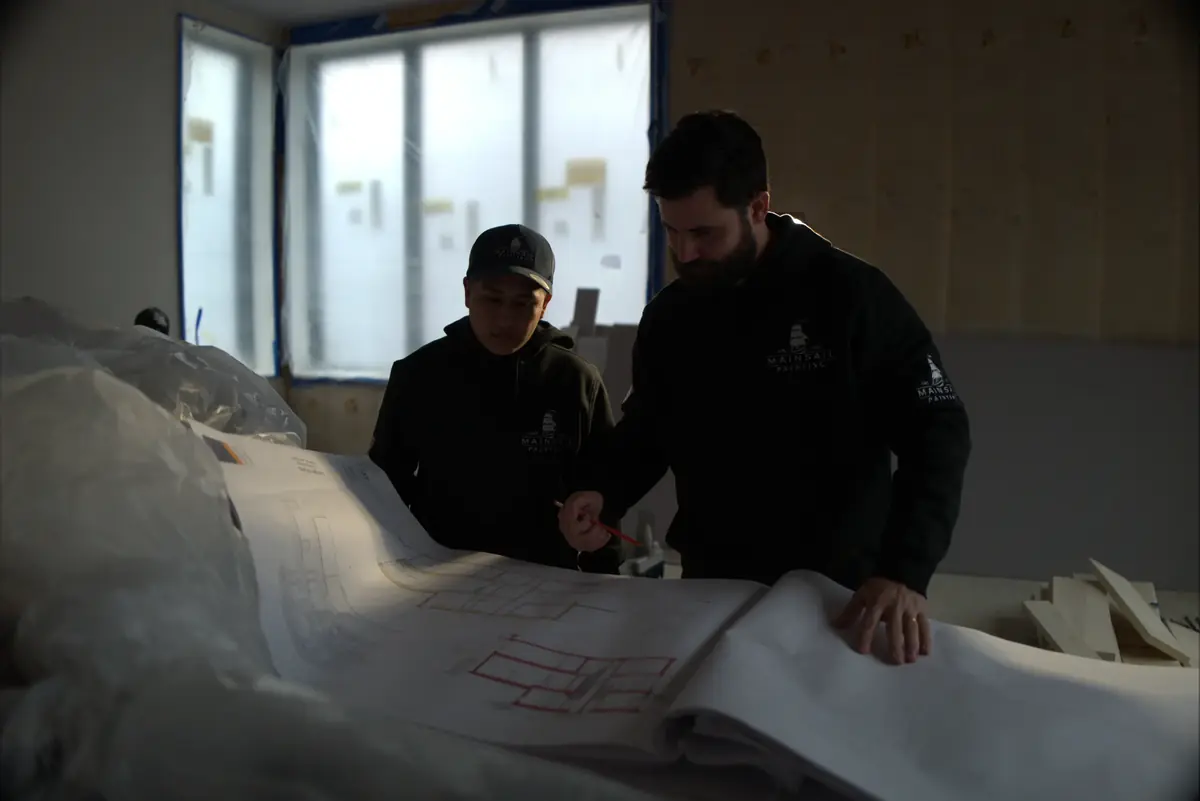
That walkthrough is the first step of our exterior painting work on Cape Cod and the South Shore. We look at every surface with you, put the findings and the prep into a written quote within one business day, and leave the house protected and picked up at the end of each working day. Finished exteriors are in our inspiration gallery.
Frequently asked questions
Can a painter quote my exterior without seeing it?
Not in a way you can rely on. Condition drives the labor and varies from one elevation to the next, which is why Preservation Brief 10 asks for each item of exterior woodwork to be examined early in the planning phase.[1] A figure from photos gets corrected after the work starts.
Is pressure washing enough preparation on its own?
No. Washing removes dirt, chalk and mildew so the next coat can bond, but it does not remove failing paint, dull a glossy film or prime bare wood. Surfaces still have to be “clean, dry and free of oil, grease, wax, rust, mildew, chalk and loose or scaling paint.”[2]
How many coats should the estimate say?
What happens if rotted wood turns up under the paint?
It is dealt with before painting, not under it. Where bare wood has stood wet for a long period, Preservation Brief 10 treats rot as a strong possibility and puts repair or replacement ahead of repainting.[1] A good estimate says in advance how that is priced.
Sources
Every fact about paint, weather or regulation in this article links to one of these pages. Sources checked on .
- U.S. National Park Service, Technical Preservation Services. Preservation Brief 10: Exterior Paint Problems on Historic Woodwork (PDF). nps.gov ↩
- Benjamin Moore. Aura Waterborne Exterior Soft Gloss (N632), technical data sheet (PDF). An example of a public data sheet, not a list of the products used on any particular job. media.benjaminmoore.com ↩
- Purdue University Cooperative Extension Service. Selection and Application of Exterior Finishes for Wood (NCR-135). extension.purdue.edu ↩
- U.S. Occupational Safety and Health Administration. 29 CFR 1926.501, Duty to have fall protection. osha.gov ↩
- U.S. Environmental Protection Agency. Renovation, Repair and Painting Program: Contractors. epa.gov ↩
- U.S. Environmental Protection Agency. Massachusetts Authorized to Implement Lead Renovation Program (news release, July 22, 2010). epa.gov ↩
- Woods Hole Oceanographic Institution. Geography & Climate. whoi.edu ↩
- U.S. Federal Trade Commission. How To Avoid a Home Improvement Scam. Consumer advice on written estimates and payments. consumer.ftc.gov ↩
Share this article